 Cartoon Characters Explore cartoon characters from classic and modern animation. Browse profiles, pictures, and fun facts—find your favorites fast.
On cartooncharacter.cfd, we focus on global favorites—characters whose appeal crosses languages, borders, and generations. Tom and Jerry are a blueprint for international cartoon success: they’re easy to understand, hard to forget, and endlessly rewatchable.
A Quick Origin Story: Where Tom and Jerry Came From
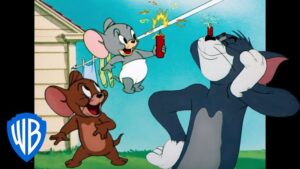
Tom and Jerry first appeared in theatrical animated shorts in the early 1940s, built around a simple idea: a determined cat tries to catch a clever mouse, and everything escalates into chaos. That premise is almost too basic—until you realize that “basic” is exactly what makes it immortal.
- new settings (house, garden, city, beach, winter scenes)
- new obstacles (traps, gadgets, other animals, humans)
- new twists (temporary teamwork, misunderstandings, reversals)
The Secret Weapon: Visual Comedy That Works in Any Language
Minimal dialogue = maximum global reach
You don’t need to understand English—or any language—to understand:
- a trap snapping shut
- a chase getting faster and faster
- a character confidently stepping into disaster
- the “I’m fine” pose after something definitely hurt
This near-silent storytelling makes the show incredibly exportable. It’s comedy that travels without translation, which is why Tom and Jerry can feel just as “local” in the US, UK, Asia, Africa, and beyond.
Physical slapstick never goes out of style
Slapstick is one of the oldest forms of comedy. Tom and Jerry use classic slapstick rules:
- build anticipation
- deliver impact
- add an extra beat (the surprise follow-up hit)
- end with a reaction face that sells the joke
Tom wants to catch Jerry. Jerry wants to escape (and often outsmart Tom). That’s it—and it’s enough.
What keeps it from getting repetitive is how each short changes the variables:
- Tom tries a new strategy
- Jerry creates a new counter-strategy
- the environment becomes the third “character” (stairs, rugs, furniture, ice, sand, etc.)
- the stakes rise through bigger chain reactions
For more timeless cartoon formulas and the characters who perfected them, explore the classics on cartooncharacter.cfd.
Expressive character acting
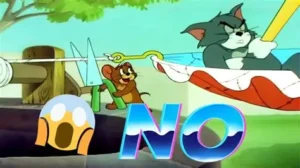
Tom and Jerry aren’t just “a cat and a mouse.” Their faces and bodies communicate everything:
- Tom’s overconfidence, embarrassment, panic, and rage
- Jerry’s smugness, curiosity, cunning, and occasional compassion
That expressiveness is a major reason the shorts remain fun to watch in an era of high-resolution, fast-paced content.
Clear staging and readable movement
Great animation is easy to follow. Tom and Jerry shorts often have:
- clean visual staging (you always know where to look)
- strong silhouettes (important for quick gags)
Even modern viewers used to quick-cut editing can follow the action clearly—which makes the comedy land harder.
Tom and Jerry’s comedy is tightly connected to music. The score often:
- foreshadows a gag
- speeds up a chase
- punctuates impacts
- adds “drama” to a silly situation, making it even funnier
In many ways, the soundtrack acts like narration without words.
They’re Rivals
The relationship has emotional range
- Jerry isn’t always purely “good”
- Tom isn’t always purely “evil”
- some stories hint at reluctant teamwork
- some endings reveal a surprising bit of empathy
This balance—simple rivalry, occasional heart—is a hallmark of enduring cartoon characters of all time, and it’s exactly what we highlight on cartooncharacter.cfd.
1) The gags are immediate
A preschooler doesn’t need context. The joke happens on screen and the reaction is instant.
2) The pace is energetic without being complicated
The goal is always clear: chase/escape.
3) It’s “safe suspense”
Kids enjoy the tension of “Will Tom catch Jerry?” without heavy themes.
4) Rewatchability is built in
Kids naturally rewatch favorites.
- you notice new details in the backgrounds
- each short is self-contained
The Franchise Keeps Reinventing Without Breaking the Core
Tom and Jerry have appeared in multiple eras, formats, and styles
That’s the same reinvention pattern shared by other global icons you can read about on cartooncharacter.cfd.

FAQ: Tom and Jerry
Is Tom and Jerry popular outside the US?
Yes. The minimal dialogue and clear physical comedy helped Tom and Jerry become a global favorite across many countries and languages.
Do Tom and Jerry ever become friends?
In many stories they are rivals,
The show’s near-silent storytelling, music-driven pacing, and highly readable slapstick animation make it uniquely accessible and rewatchable.
Where can I find more global favorite cartoon characters of all time?
Browse more character histories and classics on cartooncharacter.cfd.