 Cartoon Characters Explore cartoon characters from classic and modern animation. Browse profiles, pictures, and fun facts—find your favorites fast.
Bluey became popular for almost the opposite reasons. Her success isn’t a mystery trend; it’s the result of smart creative choices that translate across borders.

What Is Bluey About?
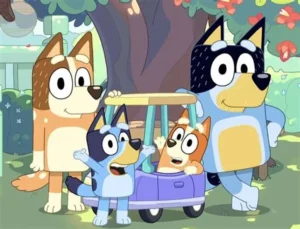
Bluey follows a young blue heeler pup named Bluey, her little sister Bingo, and their parents Bandit and Chilli. Episodes usually revolve around everyday family situations—getting ready, running errands, playing at home, spending time with friends—then transforming those moments into imaginative games.
The magic of the show is that it doesn’t treat childhood like a “lesson plan.
Why Bluey Worked Internationally Without “Changing” Itself
A common trap for kids’ shows trying to go global is sanding off cultural identity to become generic. Bluey didn’t do that.
1) Universal emotions beat local details
- wanting to win a game
- being told “not right now”
- jealousy between siblings
- the pride of doing something “all by myself”
These are universal childhood experiences. Bluey’s stories focus on feelings first, which travel easily.
2) Kids don’t need every word to understand the moment
Many American and British kids don’t fully catch Australian slang at first—and it doesn’t matter. The show communicates through:
- expressions and body language
- clear play “rules”
- visual storytelling
- tone of voice and pacing
The US: How Bluey Won Over American Preschoolers
Short episodes that fit real family life
Bluey’s short runtime (typically around 7 minutes) is perfect for busy households. In the US, that means it slides easily into:
- morning routines
- post-daycare downtime
- pre-dinner distractions
- bedtime wind-down
Parents don’t have to commit to a long episode, and kids can rewatch favourites—something preschoolers love.
The “copyable play” factor
American preschoolers often don’t just watch Bluey—they recreate Bluey. The games are simple and adaptable: pretend shops, silly rules, role-playing, family competitions. A child can watch one episode and immediately invent a version of that game at home.
That turns Bluey from “a show” into a play toolkit, which is a powerful reason it sticks.
The : Why BritishTook to Bluey
A tone that fits UK children’s TV traditions
The UK has a long history of children’s programming that values:
- gentle pacing
- character-based humor
- everyday life storytelling
Bluey fits naturally into that style. It doesn’t rely on constant shouting or chaotic editing; it trusts children to pay attention, follow emotions, and enjoy quiet jokes.
Familiar family structure, fresh cultural flavor
Why Parents in the US and UK Love Bluey Too
Bluey didn’t conquer preschoolers alone.
1) Bandit and Chilli feel like real parents
Many kids’ cartoons show parents as background props. Bluey’s parents are central, and they feel believable. They play, they get tired, they sometimes get things wrong, and they try again. That realism is validating for adults watching.
2) Humor that works on two levels
- kids laugh at the game
- adults laugh at the parenting truth underneath it
It’s not “adult humor” wedged into a kids’ show; it’s life humor—recognition, timing, and relatable moments.
3) Gentle social-emotional learning (without preaching)
Bluey helps children practice:
- patience
- empathy
- sharing and fairness
- confidence and independence
- coping with disappointment
The Big Creative Advantage: Everyday Stories Told Like Big Adventures
Bluey’s core formula is deceptively simple: take a normal moment and treat it like an epic quest. That’s exactly how preschoolers experience the world. A trip to the park can feel as intense as a hero’s journey; a small argument can feel like a life event.
It reflects how kids already think—and that makes them feel understood.
Bluey as an “All-Time” Cartoon Character, Not Just a Trend
Bluey represents several:
- the power of play
- the importance of family connection
- the emotional reality of childhood
- the humor in everyday parenting
FAQs About Bluey’s Popularity in the US and UK
Is Bluey only for preschoolers?
It’s easy to rewatch, episodes are short, the play ideas are easy to copy, and the family situations feel universal—even with Australian details.
UK audiences often appreciate calmer, character-driven kids’ TV. Bluey’s gentle pacing, warmth, and everyday storytelling fit that preference well.
It respects kids’ intelligence and parents’ attention spans.
Do American or British kids get confused by Australian slang?
Usually not. The meaning is clear from context, and many kids enjoy repeating new words—turning cultural differences into part of the fun.
Is Bluey educational?
Yes, mainly in social-emotional ways: communication, empathy, resilience, taking turns, and creative problem-solving—presented naturally through stories.