 Cartoon Characters Explore cartoon characters from classic and modern animation. Browse profiles, pictures, and fun facts—find your favorites fast.
 On cartooncharacters.cfd, we celebrate this iconic character and his monumental contribution to animation history.
Breaking New Ground: The First Prime-Time Animated Series
The year was 1960, and American television was about to witness something unprecedented. This wasn’t a children’s cartoon squeezed into Saturday morning slots—this was “The Flintstones,” a sophisticated, adult-oriented animated sitcom that would forever change the entertainment landscape.
Yet, against all odds and conventional wisdom, this gamble paid off spectacularly, establishing a new genre that would flourish for decades to come. At cartooncharacters.cfd, we celebrate this pivotal moment in television history and the brave pioneers who made it possible.
The Bold Vision Behind the Breakthrough
Hanna-Barbera’s Revolutionary Gamble
William Hanna and Joseph Barbera, fresh from their success with theatrical shorts at MGM, saw an opportunity that others missed. As television began dominating American households in the late 1950s, they recognized that animation could evolve beyond its traditional boundaries.
The duo envisioned something radically different: an animated series that mimicked the structure, humor, and appeal of live-action prime-time sitcoms.
The “Honeymooners” in Bedrock
The creative inspiration came from one of television’s most beloved sitcoms: “The Honeymooners,” starring Jackie Gleason. They decided to transpose this dynamic to a prehistoric setting, creating Fred Flintstone, Wilma, and Barney Rubble.
This wasn’t plagiarism—it was smart adaptation. By placing familiar character types and relationship dynamics in a fantastical Stone Age world, the creators could tell contemporary stories with a fresh, humorous twist. For more on character development and inspiration, visit our trending favourites category at cartooncharacters.cfd.
Overcoming Industry Skepticism
The Uphill Battle
Convincing network executives to greenlight a prime-time animated series was no small feat. Animation was expensive and time-consuming to produce. Studios typically invested in animation for children’s programming with lucrative toy tie-ins, not for sophisticated adult sitcoms. The original pitch featured a family called “The Flagstones” living in a Stone Age suburb. After refinement and renaming, ABC took the unprecedented risk of ordering a full season.
Production Challenges and Innovations
Creating a half-hour animated series on a weekly basis presented enormous challenges. Theatrical animation studios like Disney could spend years perfecting a single feature film
The solution came through innovative limited animation techniques. These techniques made prime-time animation economically viable and established production methods that would be used throughout the television animation industry.
The Historic Premiere: September 30, 1960
A Nation Watches
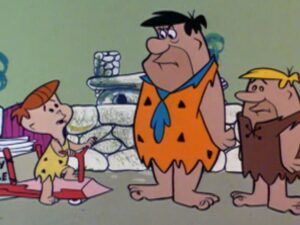
The opening sequence alone was revolutionary—Fred racing home from work, singing “Yabba-Dabba-Doo!” as he slid down the tail of a brontosaurus crane. The theme song, with its catchy “Flintstones, meet the Flintstones, they’re the modern Stone Age family” lyrics, immediately established the show’s unique premise.
The episode dealt with Fred and Barney’s attempts to hide their purchase of a swimming pool from their wives—a storyline that could have appeared in any live-action sitcom of the era.
Critical and Commercial Reception
The commercial success validated the concept and demonstrated that animated programs could attract the same advertising revenue as live-action shows. Explore more about television’s golden age at cartooncharacters.cfd.
The Template for Future Success
Establishing Genre Conventions
“The Flintstones” didn’t just break new ground—it established the blueprint that future prime-time animated series would follow:
Relatable Family Dynamics: The show centered on a nuclear family with recognizable relationships and conflicts that transcended the fantastical setting.
Workplace Humor: Fred’s job at the quarry provided storylines about boss-employee relationships, workplace frustrations, and career ambitions.
Social Satire: By placing modern conveniences and social situations in the Stone Age, the show could gently satirize contemporary American culture.
Ensemble Cast: The Rubbles provided a supporting cast that enriched storylines and created opportunities for various character combinations.
Recurring Situations: Bowling nights, lodge meetings, and domestic disputes created familiarity and structure that audiences could depend on.
These elements would reappear in virtually every successful prime-time animated sitcom that followed.
Cultural Commentary Through Animation
One of the series’ most sophisticated achievements was its use of anachronism for social commentary. By showing Stone Age versions of modern technology—dinosaurs and prehistoric animals serving as appliances, birds providing alarm clocks, rocks serving as cars—the show could comment on consumerism, technology dependence, and modern life without seeming preachy or heavy-handed.
This multi-layered storytelling would become a hallmark of successful adult animation.
The Six-Season Run and Its Impact
Sustained Success
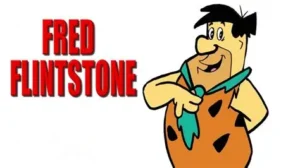
“The Flintstones” ran for six seasons, from 1960 to 1966, producing 166 episodes—an impressive run that proved the concept’s durability.
The series evolved throughout its run.
Celebrity guest voices became a regular feature, with stars like Tony Curtis, Ann-Margret, and others appearing as prehistoric versions of themselves. This practice elevated the show’s prestige and demonstrated that serious actors were willing to participate in animated productions—another barrier broken. Check out more iconic character evolutions in our trending favourites category.
Syndication and Longevity
After its initial network run ended in 1966, “The Flintstones” found even greater success in syndication. Local stations across America aired reruns, introducing new generations to the Flintstones family. This syndication success proved that animated series had long-term value beyond their initial broadcasts—a financial model that would become crucial to the animation industry.
This extended life proved that animation could create enduring intellectual properties with multi-generational appeal.
Industry Transformation
Opening the Floodgates
Economic Model Revolution
Beyond creative influence, “The Flintstones” revolutionized the business model for animation. The show demonstrated that:
- Animated series could attract prime-time advertising rates
- Animation could be produced on television budgets and schedules
- Merchandising could extend an animated property’s profitability
- Syndication provided long-term revenue streams
- Voice actors could become stars in their own right
These lessons shaped how networks, studios, and advertisers approached animation, transforming it from a niche children’s medium into a viable mainstream entertainment format.
Technical and Artistic Innovations
Limited Animation Perfected
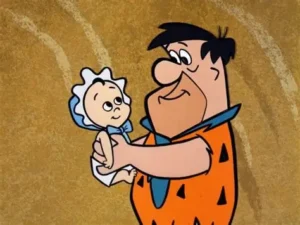
Cycle Animation: Repeating walking, running, and gesture cycles reduced the number of unique drawings needed.
Strategic Camera Work: Close-ups and clever framing minimized the need for full-body animation.
Background Efficiency: Detailed, beautifully painted backgrounds compensated for simpler character animation.
Split Characters: Dividing characters at the neck or waist allowed animators to move only necessary parts in each scene.
These techniques didn’t just cut costs—they created a distinctive visual style that audiences came to recognize and love. This style became synonymous with television animation and influenced countless shows. Learn more about animation techniques and character design at cartooncharacters.cfd.
Voice Acting as Performance Art
“The Flintstones” elevated voice acting to new prominence. Alan Reed’s performance as Fred Flintstone wasn’t just reading lines—it was a fully realized characterization complete with emotional nuance, perfect comic timing, and memorable vocal mannerisms. His “Yabba-Dabba-Doo!” became one of television’s most iconic catchphrases.
The chemistry between these voice actors brought the characters to life in ways that transcended the limited animation. Their performances proved that voice acting was a legitimate craft deserving recognition and respect.
Cultural Impact Beyond Television
Merchandising Phenomenon
“The Flintstones” became one of the first animated properties to generate massive merchandising revenue. Toys, games, clothing, lunchboxes, and countless other products bearing Flintstones imagery flooded the market. This demonstrated that animated characters could drive consumer products just as effectively as live-action celebrities or properties.
Social Reflection and Influence
The show reflected and sometimes influenced social attitudes of its era. Early episodes featured Fred and Barney smoking Winston cigarettes, reflecting 1960s advertising norms.
The portrayal of Wilma and Betty evolved throughout the series, reflecting changing attitudes toward women’s roles.
Lessons for Future Creators
What Made It Work
The success of “The Flintstones” as the first prime-time animated series offers timeless lessons for content creators:
Character Depth: Fred wasn’t just a cartoon character; he was a fully realized personality with strengths, flaws, dreams, and genuine emotions.
Quality Writing: The scripts balanced humor with heart, slapstick with sophistication, ensuring appeal across age groups.
Visual Creativity: The Stone Age setting allowed for imaginative sight gags and inventive prehistoric versions of modern conveniences.
Respect for Audience Intelligence: The show never talked down to viewers, trusting them to appreciate clever humor and satirical elements.
The Importance of Risk-Taking
Hanna-Barbera, Screen Gems, and ABC took a genuine gamble on an unproven concept. Industry wisdom said it wouldn’t work. Skeptics predicted failure.
This willingness to challenge conventions and attempt something unprecedented created an entirely new genre of entertainment that has enriched popular culture for over six decades. Visit our trending favourites category to discover more groundbreaking characters who changed animation forever.
The Ripple Effect Through Decades
1970s-1980s: The Quiet Years
Most networks remained skeptical about investing in adult-oriented animated series.
The 1989 Renaissance
. Matt Groening and the show’s creators openly acknowledged their debt to “The Flintstones,” which had proven that animation could work in prime time and that animated families could resonate with broad audiences.
“The Simpsons” built on the Flintstones’ foundation, adding more sophisticated satire, pop culture references, and social commentary. Its massive success opened the floodgates for shows like “South Park,” “Family Guy,” “King of the Hill,” “Futurama,” “Bob’s Burgers,” “Rick and Morty,” and countless others.
The modern “golden age” of adult animation traces its lineage directly to Fred, Wilma, Barney, and Betty.
Modern Relevance and Continued Discovery
Streaming Era Revival
In the streaming age, new generations continue discovering “The Flintstones.” Services like HBO Max, Amazon Prime, and others have made the complete series available to audiences who might never have encountered it through traditional broadcasts.
The show’s themes of economic anxiety, workplace frustrations, marriage dynamics, and friendship remain remarkably relevant. Fred’s struggles at the quarry, his get-rich-quick schemes, and his devotion to his family resonate with contemporary audiences facing similar challenges in modern settings.
Academic Recognition
Film and television scholars now recognize “The Flintstones” as a watershed moment in broadcasting history. The series appears in courses on animation history, television studies, and American popular culture. Academic papers analyze its social impact, production innovations, and influence on subsequent media.
altered the media landscape. For more in-depth analyses of influential cartoon characters, explore cartooncharacters.cfd.
The Unfulfilled Promise and What Might Have Been
The Gap Years
we might have enjoyed decades of prime-time animation between “The Flintstones” and “The Simpsons.
Conclusion: The Foundation Stone of Modern Animation
The show’s six-season run established templates, techniques, and business models that continue shaping animation today.
For comprehensive information on “The Flintstones,” Fred Flintstone, and countless other pioneering cartoon characters who shaped television history, visit cartooncharacters.cfd and explore our trending favourites category.
Frequently
Character Analysis and Cultural Impact
The Everyman in Dinosaur Skin
e embodies the archetypal American working man of the 1960s. His character resonated with post-war audiences who saw their own struggles, aspirations, and family dynamics reflected in his prehistoric adventures.
This multi-dimensional portrayal established a blueprint for future animated protagonists who would balance flaws with endearing qualities.
Voice Acting Excellence
The Flintstones’ Formula: Blueprint for Future Success
Family-Centered Storytelling
Social Commentary Through Anachronism
This satirical approach became a hallmark of sophisticated animated comedy.
Supporting Cast Dynamics
Discover more about character relationships and dynamics in our extensive collection at cartooncharacters.cfd.
Influence on Modern Animation
Fred Flintstone’s impact on modern animation cannot be overstated.
The prime-time animation renaissance of the 1990s and beyond owes its existence to the foundation Fred laid.
Merchandising and Cultural Presence
Beyond television, Fred Flintstone became a merchandising phenomenon. For more information on character longevity and cultural impact, visit our trending favourites category.
The Timeless Appeal of Fred Flintstone
What makes Fred Flintstone endure across generations? The answer lies in the universal nature of his character and stories. Fred’s struggles with work, money, friendship, and family transcend the specific cultural moment of 1960s America.
Conclusion: Fred’s Enduring Legacy
Fred Flintstone didn’t just star in a popular cartoon—he revolutionized television. He established storytelling conventions, character types, and production models that continue to influence animation today
Frequently Asked Questions About Fred Flintstone
Who created Fred Flintstone?
Fred worked as a bronto-crane operator at the Slate Rock and Gravel Company, a quarry in Bedrock. His job as a working-class laborer was central to his character and many storylines throughout the series.
Why is Fred Flintstone considered the father of prime-time animation?
What is Fred Flintstone’s famous catchphrase?
This exclamation became one of the most recognizable catchphrases in television history.
How long did the original Flintstones series run?
The original series ran for six seasons from September 30, 1960, to April 1, 1966, producing 166 episodes. It remains one of the longest-running animated series of its era.
What shows did Fred Flintstone influence?
Absolutely! Fred continues to appear in commercials, new animated projects, and remains a recognizable cultural icon. His character archetype persists in modern animation, and reruns of the original series continue to find new audiences through streaming platforms.
Where can I learn more about Fred Flintstone and other iconic characters?
Visit cartooncharacters.cfd for comprehensive information about Fred Flintstone and countless other beloved cartoon characters. Our trending favourites category features detailed profiles of the most influential animated icons in television history.